Importance Of Document Management Systems
Documents sit at the centre of daily operations for most UK businesses, from contracts and...
Read More
Wednesday, 28 January 2026
Sustainability in the workplace often starts with everyday decisions. How materials are used, stored, disposed of and recovered has a direct impact on costs, compliance and environmental responsibility. For many organisations, waste is still treated as an afterthought rather than a system that can be measured, improved and aligned with wider business goals.
Smarter management strategies help workplaces reduce environmental impact while improving efficiency and accountability. They also support procurement teams, facilities managers and leadership teams who need clear processes rather than ad hoc fixes. The most effective approaches focus on structure, consistency and long-term planning rather than short term clean ups.
Many businesses generate more waste than expected because systems grow organically. Different teams order supplies independently. Storage areas become cluttered. Disposal methods vary across sites. Recycling guidance is unclear or inconsistently applied.
These gaps create knock on effects. Waste volumes rise. Recycling rates fall. Costs increase. Reporting becomes unreliable. Over time, this makes it harder to meet sustainability targets or demonstrate responsible practice to stakeholders.
A clear waste management approach brings control back into the process. It helps organisations understand what waste they produce, where it comes from and how it can be reduced or reused.
Sustainable workplaces focus on prevention before disposal. Reducing waste at source has a greater impact than managing waste once it has already been created.
This often starts with procurement decisions. Standardised products, reduced packaging and smarter ordering all limit unnecessary waste. When these decisions are supported by consistent processes, teams are less likely to over order or dispose of unused materials.
Waste reduction also supports wider environmental commitments. Lower volumes mean fewer collections, reduced transport emissions and less reliance on landfill. Over time, this strengthens an organisation’s sustainability profile and improves reporting accuracy.
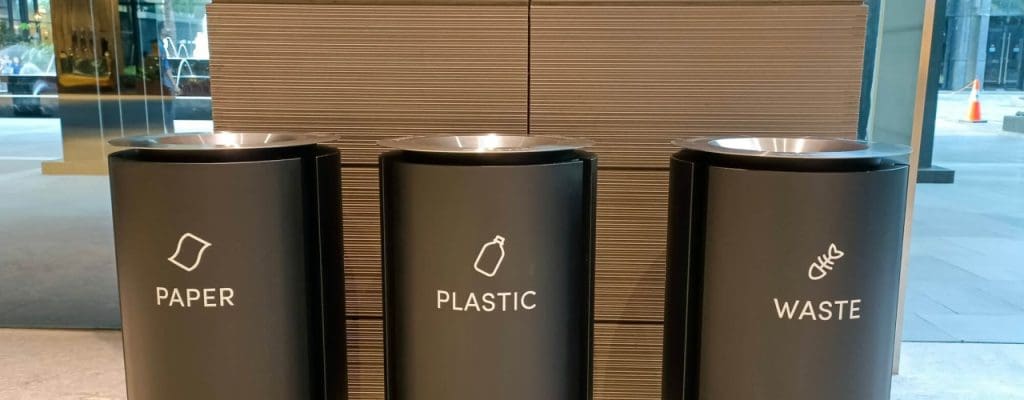
Clear separation of waste streams is one of the simplest ways to improve sustainability. Mixed waste limits recycling potential and increases disposal costs. Segregation allows materials to be recovered, recycled or reused more efficiently.
Effective segregation depends on clarity. Bins should be clearly labelled and placed where waste is generated, not hidden away. Guidance should be simple and consistent across all locations.
When segregation is part of a wider waste management strategy, it becomes routine rather than reliant on individual behaviour. This leads to better outcomes without adding complexity to daily operations.
Understanding waste volumes and types allows organisations to move from assumptions to evidence. Data highlights where waste is being produced, which materials dominate and how patterns change over time.
This information supports better decision making. Procurement teams can adjust specifications. Facilities teams can optimise collection schedules. Sustainability leads can report progress with confidence.
Data driven waste management also supports compliance. Accurate records help organisations meet regulatory requirements and demonstrate responsible practice during audits or reviews.
Many organisations rely on multiple suppliers for waste related services. This can lead to inconsistent service levels, fragmented reporting and higher costs.
Consolidation simplifies oversight. A single, structured approach allows policies to be applied consistently across sites. It also reduces administrative burden for procurement and finance teams.
Consolidation does not mean loss of flexibility. When planned properly, it allows services to scale with business needs while maintaining control and transparency.
A practical starting point for improving sustainability includes
This approach focuses on improvement through structure rather than disruption.
Waste is closely linked to efficiency. Excess materials take up space, create clutter and require handling. Poorly managed disposal leads to delays and confusion.
Clear management systems streamline operations. Storage areas remain organised. Collections are predictable. Teams spend less time resolving issues and more time focused on core tasks.
This is particularly valuable for multi-site organisations where consistency is essential. Standard processes reduce variation and improve reliability across the business.
Regulations around waste disposal and environmental responsibility continue to tighten. Businesses are expected to demonstrate due diligence, proper handling and accurate reporting.
A proactive approach reduces risk. It ensures materials are handled correctly, documentation is maintained and responsibilities remain clear across the organisation. This protects businesses from penalties while supporting ethical and compliant practice.
Strong compliance also supports reputation. Customers, partners and employees increasingly expect organisations to operate responsibly, transparently and with accountability.
If you are reviewing how your workplace handles waste and sustainability, Bates Office can support a more structured and practical approach. Our team works with organisations to assess existing processes, reduce inefficiencies and implement consistent waste management solutions that align with operational and environmental goals.
Employees are more likely to engage with sustainability initiatives when systems are clear and practical. Confusing guidance or inconsistent processes discourage participation.
Clear waste processes reinforce organisational values. They show that sustainability is built into operations rather than treated as a side project. Over time, this supports a culture of responsibility and awareness.
When supported by strong systems, employee engagement becomes a natural outcome rather than something that needs constant reinforcement.
Sustainability improvements are most effective when they start with clarity. Understanding current practices, identifying inefficiencies and setting realistic objectives provides a strong foundation.
Rather than introducing multiple initiatives at once, focus on systems that deliver measurable impact. This could involve improving segregation, reducing unnecessary waste or consolidating services across the organisation.
A phased and structured approach allows improvements to embed gradually while maintaining operational stability, consistency and control.
Waste does not exist in isolation. It is directly linked to procurement, storage, usage and disposal. Treating it as part of a wider workplace supply strategy creates better outcomes.
Integrated planning ensures materials flow efficiently through the workplace lifecycle. This reduces waste generation while supporting cost control and sustainability objectives.
When aligned with broader services, waste management becomes part of a cohesive workplace strategy rather than a standalone task.
Short term fixes rarely deliver lasting change. Sustainable workplaces benefit from long term planning, consistent processes and regular review.
A well-structured approach evolves with the organisation. It adapts to changes in scale, regulation and operational needs without losing control, visibility or clarity.
This long-term view supports resilience. It allows organisations to improve sustainability steadily while maintaining efficiency, consistency and compliance.
If you are looking to improve sustainability through clearer, more effective waste processes, Bates Office can help you take a practical next step. Our team supports organisations with structured waste management solutions that reduce waste, improve efficiency and support responsible workplace operations. Contact us today to explore how a more organised approach could benefit your business.
Read the latest news, insights, and updates from Bates Office.
Documents sit at the centre of daily operations for most UK businesses, from contracts and...
Read More
Sustainability in the workplace often starts with everyday decisions. How materials are used, stored, disposed...
Read More
Employee productivity is shaped by more than systems, targets, or management style. The physical environment...
Read More